



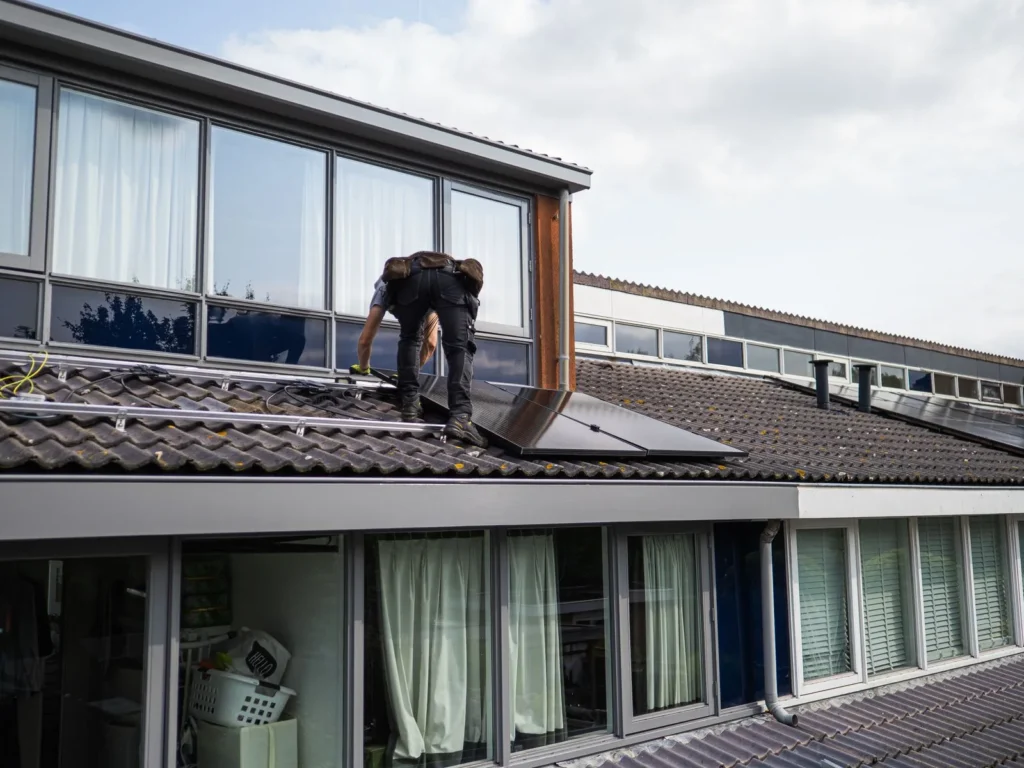
Solar marketing in the DMV changed on January 1, 2026. The federal Residential Clean Energy Credit that installers leaned on for years is gone for new home systems, so the installers who keep winning jobs in Fairfax, Loudoun, Prince William, Montgomery and Prince George’s counties and the District are the ones who sell the savings, the local programs and the quality of the install instead of a tax break.
This guide gives residential and small commercial solar companies 10 solar marketing ideas built on the rules that actually apply here: what the IRS says about the expired credit, how Virginia net metering limits system size, Maryland’s licensing and contract rules for solar, and the state and District programs your customers can still use. Each idea includes what to do, why it works and how to measure it.
Why solar marketing in the DMV is different
The 30% homeowner credit has ended. The IRS page for the Residential Clean Energy Credit says the credit equals 30% of the cost of qualified clean energy property installed from 2022 through December 31, 2025, and is not available for property placed in service after December 31, 2025. The statute itself, 26 U.S.C. § 25D(h), says the credit doesn’t apply to expenditures made after that date. Any ad, landing page or sales deck that still promises homeowners “30% back from the IRS” on a new system is now a liability.
Three jurisdictions, three rulebooks. Virginia caps residential net metering systems at 25 kilowatts and ties system size to past usage (Va. Code § 56-594). Maryland says solar panel systems must be mounted by a licensed home improvement contractor and connected by a licensed electrician (Maryland Home Improvement Commission). The District runs its own Solar for All program for income-qualified residents. One generic “go solar” page can’t speak accurately to all three.
Income-qualified programs reward the right contractors. Maryland’s FY27 Maryland Solar Access Program (MSAP) offers rebates to income-eligible homeowners, but only through contractors on MEA’s participating contractor list. Being on that list, and saying so clearly, is a marketing asset in itself.
1. Audit every ad and page for the expired tax credit
Start with a cleanup before you spend another dollar. Search your website, Google Ads, Meta ads, proposal templates, door hangers and email sequences for “tax credit,” “30%,” “ITC” and “25D.” For residential customers, replace the claim with what you can still say truthfully: utility bill savings based on their actual usage, local programs they may qualify for, battery backup, warranties and the quality of your installation.
- Commercial jobs: have the customer’s tax adviser confirm any business credit rather than promising one in an ad.
- Update old blog posts. A 2024 article titled “How the 30% solar credit works” now sends the wrong message. Add a clear note at the top that the credit ended for property placed in service after December 31, 2025, and link to the IRS page.
- Measure it: a checklist of every asset reviewed and the date it was fixed. Then watch whether lead quality improves (fewer “I thought I’d get 30% back” cancellations).
2. Sell savings with a usage-based proposal, not a generic promise
Without the federal credit, the honest pitch is the customer’s own numbers. Ask for 12 months of electric bills before you quote. This isn’t just good sales practice in Virginia: under Va. Code § 56-594, a residential net metering system can’t be larger than 25 kilowatts, and for systems installed after July 1, 2020, size is capped at 100% (Phase I utility territory) or 150% (Phase II utility territory) of expected annual consumption based on the previous 12 months of billing history.
Turn that into a marketing promise: “We size your system to your real usage and Virginia’s net metering rules, so you’re never sold panels you can’t use.” Put a short explainer on your Virginia service page and a bill-upload form on your quote page.
Measure it: the share of leads who upload a bill (a strong buying signal) and your close rate on those leads versus leads without bills.
3. Build a separate page for each jurisdiction
A Fairfax homeowner, a Bethesda homeowner and a Capitol Hill homeowner face different rules, utilities and programs. Give each its own page with the facts that matter there:
| Topic | Virginia | Maryland | Washington, DC |
|---|---|---|---|
| Net metering basics | Residential systems up to 25 kW; size tied to 12 months of usage (Va. Code § 56-594) | Generally up to 2 MW; utilities offer the standard net metering contract first come, first served until the earlier of 3,000 MW statewide or July 1, 2027 (Md. Public Utilities § 7-306) | Ask your utility and DOEE for current rules (not covered here) |
| Who installs | Contractor license with the Alternative Energy System (AES) specialty, plus a licensed electrical contractor for electrical work (18VAC50-22-30) | Licensed home improvement contractor mounts the system; licensed electrician connects it (MHIC) | Check DC licensing for your trade |
| Income-qualified program | Check current utility and state offerings | FY27 Maryland Solar Access Program rebates through participating contractors | Solar for All (DOEE) |
| Message to lead with | Right-sized system, bill savings, battery backup | MHIC-licensed install, MSAP eligibility, wildlife barrier included | Solar for All partner info, community solar for renters |
Watch the Maryland date. Under the current text of § 7-306(d), utilities must offer the standard net metering contract until the earlier of 3,000 MW of customer-generator capacity statewide or July 1, 2027 (the statute has separate rules for some community solar projects). If you sell in Maryland, keep your page honest: tell homeowners what the law says today, don’t guess what replaces it, and update the page when the Public Service Commission or the legislature acts.
The Maryland figures come from Md. Public Utilities § 7-306; the Virginia license specialty comes from 18VAC50-22-30. Each page should also link to your local SEO foundations: a matching Google Business Profile service area, local reviews and photos of installs in that area.
4. Lead with licenses, not slogans
A homeowner is letting a crew onto the roof and into the electrical panel. Credentials are your strongest trust signal, and the rules give you a clear script.
- Virginia: Virginia’s Board for Contractors defines Alternative Energy System Contracting (AES) as installing, repairing or improving alternative energy generation systems from the customer’s meter, and says the specialty does not cover electrical, plumbing, gas fitting or HVAC functions. Show your AES specialty and name the licensed electrical contractor who does the electrical work, whether that’s your own team or a partner.
- Maryland: the MHIC says solar panels must be mounted by a licensed home improvement contractor whether they go on the roof or on the ground next to the house, and the person who connects them to the electric box or grid needs an electrician’s license issued by the local jurisdiction. Put your MHIC number and your electrician’s license on every Maryland page and proposal.
Our guide for DMV electricians covers how to present electrical licenses across all three jurisdictions; if you partner with an electrical contractor, it’s worth sharing with them.
Measure it: run an A/B test on your quote page with and without a license badge row near the form and compare form completion rates.
5. Turn Maryland’s wildlife barrier rule into a selling point
Maryland law says a home improvement contract to install a solar system on a roof must include a barrier that meets industry standards to prevent wildlife intrusion and damage to the system or the roof, unless the customer waives it after being told the cost and the risks of skipping it (Md. Business Regulation § 8-501(f)). The same section lists what every Maryland home improvement contract must contain, including the contractor’s license number, the salesperson’s name and license number, start and completion dates and a notice about the Commission.
Explain it on your Maryland page (“Every roof install includes a critter guard, as Maryland law requires”), show a photo of a finished barrier, and include it as a line item in proposals. It signals that you know the rules and that a lower competitor quote might be missing it.
Measure it: track how often prospects mention the barrier or contract details in sales calls, and your win rate in Maryland before and after the change.
6. Get on the Maryland Solar Access Program contractor list and say so
MEA describes MSAP as a rebate program for income-eligible Maryland residents, created by the Brighter Tomorrow Act of 2024. For FY27, applicants need an approved upfront rebate reservation before installation, must use a contractor from MEA’s participating contractor list, and can apply through 3:00 p.m. on May 31, 2027 (the portal may close earlier if requests exceed the budget, which MEA anticipates at up to $10 million). A participating contractor can apply on the homeowner’s behalf and even receive the rebate and pass it through as a discount.
- Create an MSAP page that explains the two steps (reservation before install, payment request after interconnection) in plain language.
- Offer to handle the paperwork. That’s a real service, and it removes a hurdle for qualifying families.
- Don’t promise eligibility or rebate amounts in ads. Say “may qualify” and send people to your MSAP page.
Measure it: MSAP inquiries, reservations approved and installs completed per month.
7. Partner with Solar for All and community solar in the District
DOEE says Solar for All aims to bring solar benefits to 100,000 low- to moderate-income families in the District, partnering with organizations to install solar on single-family homes and develop community solar for renters and residents of multi-family buildings. If you work in DC, find out how to become a partner, then build a page that explains the program in plain terms and links to DOEE’s eligibility site. For homeowners who don’t qualify, explain what you offer instead.
Measure it: DC leads by source (program referral vs. search vs. referral) and the share that convert.
8. Show up where solar buyers search on Google
Google’s Local Services Ads category list includes “Solar energy contractor,” so check eligibility for your area. Pair it with a Google Business Profile that lists your real service area, a steady flow of install photos and replies to every review (our Google Business Profile guide walks through each field).
For search campaigns, organize ad groups by intent (“solar panels Loudoun County,” “solar battery backup Montgomery County,” “solar installer near me”) and send each to its matching jurisdiction page. Our Google Ads management team builds campaigns this way so you’re not paying for clicks from outside your licensed area.
Measure it: cost per qualified lead (bill uploaded or site visit booked), not cost per click.
9. Advertise financing carefully
If you offer solar loans or payment plans and your ads mention a monthly payment, a down payment or a finance charge, federal credit advertising rules can require extra disclosures. We covered those “triggering terms” in our mortgage marketing guide; the same discipline applies to solar loan ads. In Maryland, § 8-501 also requires the contract to state the number of monthly payments, each payment’s amount and any finance charge, and if payment is secured by the home, a bold notice about the lien and a three-business-day right to rescind.
Measure it: financing applications started vs. approved, and cancellation rates after the rescission window.
10. Collect reviews and referrals after the system goes live
The best time to ask for a review is the week the customer sees their first lower bill. Ask every customer, never offer a reward for positive reviews only and never write reviews for customers. We summarized the federal and Google review rules in our cleaning business guide, and they apply to installers too. Add a simple referral program that rewards any referral, not just referrals who leave a five-star review.
Measure it: reviews per completed install and referral leads per quarter.
How to budget and measure solar marketing
Solar has a long sales cycle, so measure the whole funnel, not just leads.
- Track five stages: lead, bill received, site assessment, signed contract, system interconnected.
- Tag every lead by channel (Local Services Ads, Google search, referral, MSAP or Solar for All, door-to-door, events) and by jurisdiction.
- Review cost per signed contract by channel every month, and pause channels that produce leads but no site assessments.
Worked example (illustrative numbers only): an installer spends $4,000 a month on search ads and gets 40 leads, 18 bill uploads, 10 site assessments and 3 signed contracts. That’s about $1,333 per contract. Shift budget toward the jurisdiction pages that turn bills into site assessments.
Grow your solar company with a Northern Virginia marketing team
Pixel This Marketing is a Northern Virginia digital marketing agency with offices in Sterling and Ashburn. We help home service and energy companies across DC, Maryland and Virginia with websites, local SEO, Google Ads and social media built around the rules in each jurisdiction.
Get a custom marketing proposal for your solar company, or book a call to review your ads and pages after the tax credit change.
Frequently Asked Questions
Is the 30% federal solar tax credit still available for homeowners?
No. The IRS says the Residential Clean Energy Credit is not available for property placed in service after December 31, 2025, and 26 U.S.C. § 25D(h) says it doesn’t apply to expenditures made after that date. Solar companies should remove residential “30% tax credit” claims from ads and pages.
What is the best way to market a solar business without the tax credit?
Sell savings based on each customer’s own electric bills, explain the local rules and programs that apply where they live, lead with your licenses, and use Local Services Ads, a strong Google Business Profile and reviews to win trust. Measure cost per signed contract, not cost per lead.
How big can a residential solar system be in Virginia?
Under Va. Code § 56-594, a residential net metering system can be up to 25 kilowatts, and systems installed after July 1, 2020 are also limited to 100% or 150% of expected annual consumption, depending on the utility’s phase, based on the previous 12 months of billing history.
Do solar installers need a home improvement license in Maryland?
Yes. The Maryland Home Improvement Commission says solar panel systems must be mounted by a licensed home improvement contractor, whether on the roof or the ground next to the house, and the person who connects them to the electric box or grid must hold a local electrician’s license.
How do Maryland homeowners get a solar rebate?
Income-eligible homeowners can apply for the FY27 Maryland Solar Access Program through the My MEA portal, using a contractor on MEA’s participating contractor list. A rebate reservation must be approved before installation, and the application deadline is May 31, 2027 unless funds run out sooner.
Last updated November 25, 2026