



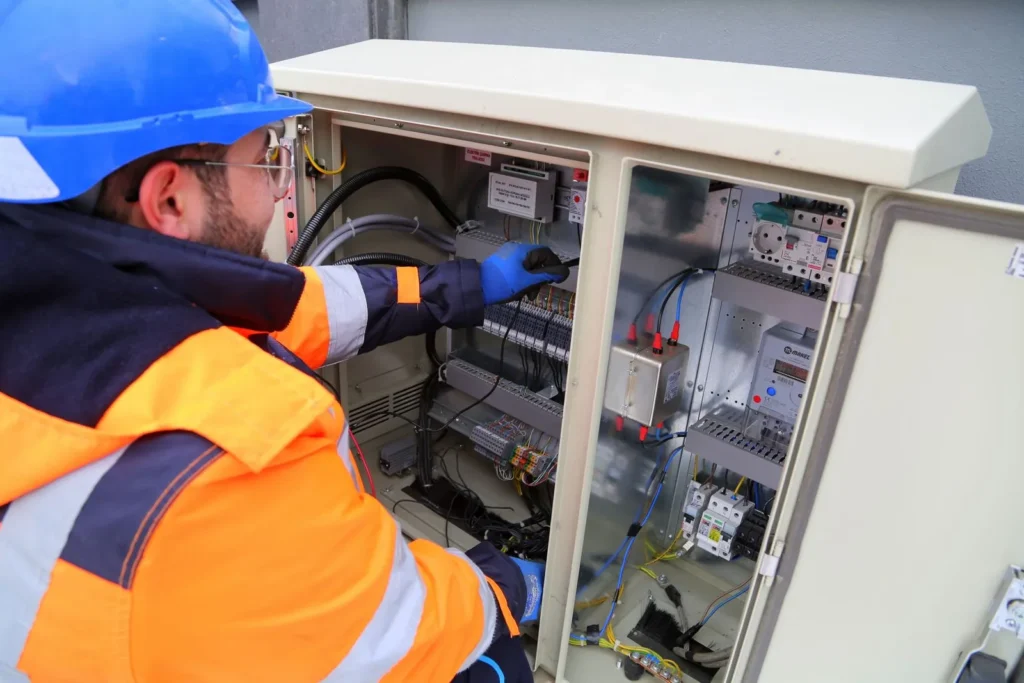
Electricians in Northern Virginia, DC and suburban Maryland have no shortage of work: panel upgrades in older Fairfax and Montgomery County homes, EV charger installs in Loudoun and Prince William, kitchen and basement remodels that need new circuits, and commercial tenant fit-outs across the region. The challenge is getting the jobs you want, at the price you want, instead of competing on the cheapest quote. The electrician marketing ideas that work here start with the one thing homeowners and general contractors can verify: your license.
This guide gives DMV electrical contractors 10 practical marketing ideas based on how licensing, permits and Google’s tools work in Virginia, Maryland and DC. Each idea covers what to do, why it works and how to measure it.
Why electrician marketing in the DMV is different
Three licensing systems, one market. Maryland’s Board of Electricians says “All electrical work in Maryland must be performed by a licensed Master, Journeyperson, or Apprentice Electrician,” with violations carrying fines of up to $5,000. Virginia licenses electricians as tradesmen through the Board for Contractors, and an electrical contractor’s classification requires a master electrician tradesman license (18VAC50-22-61). DC licenses electricians through the Board of Industrial Trades, and electrical contractors need a designated DC-licensed master tradesperson and a bond.
Permits are part of almost every job. Fairfax County says a residential electrical permit is “required for new residential service, new electrical equipment and/or fixtures, replacement of electrical equipment or fixtures, and electrical vehicle charging station circuits and outlets.”
The federal EV charger credit has ended. The tax code now says the alternative fuel vehicle refueling property credit “shall not apply to any property placed in service after June 30, 2026” (26 U.S.C. 30C(i)). Any ad, landing page or quote template still promising a “30% federal tax credit” on a home charger installed now is out of date.
1. Make your license the headline, not the footer
Homeowners can’t judge wiring quality, but they can check a license. Put yours in the places people decide: website header or hero, Google Business Profile description, truck, yard sign, estimates and invoices.
- Virginia: show your contractor license number and class plus the master electrician who qualifies the firm. Fairfax County’s permit page links homeowners straight to the DPOR license lookup, so expect them to check.
- Maryland: show your state license details and note any local registrations. The board’s FAQ says a licensee “may also have to obtain a registration in a local jurisdiction” to provide services and obtain a permit there.
- DC: show your DC master and contractor license details and that you are bonded.
Measure it: clicks on a “Verify our license” link and how many callers mention they checked.
2. Publish a credentials table for all three jurisdictions
If you work across the river, one table answers the “are you licensed here?” question before it’s asked. Fill in your own numbers; the requirements below come from each licensing body’s own pages.
| Jurisdiction | What the official source says | What to show on your site | Source |
|---|---|---|---|
| Virginia | Electrical contractor classification requires a master electrician tradesman license; electrician licenses expire three years after issue, with 3 hours of continuing education per designation | Contractor license #, class, master electrician name and license # | 18VAC50-30 |
| Maryland | All electrical work by a licensed master, journeyperson or apprentice; master electricians file insurance with the board (at least $300,000 general liability and $100,000 property damage) | State license #, “insured” with the board, local registrations | MD Board of Electricians |
| DC | Electrical contractors need a designated DC-licensed master tradesperson and a bond; master license by exam requires 8 years / 16,000 work hours | DC master + contractor license #, “bonded in DC” | DLCP electrician instructions |
Measure it: leads by state (use a “Where is your project?” field on your form).
3. Sell “permitted and inspected” as the safe choice
Fairfax County notes that property owners may get permits in their own name, “however, it is strongly recommended a properly licensed contractor pull the permits.” Use that line. Every service page should say you pull the permit, schedule the inspection and leave the homeowner with the paperwork they’ll want when they sell.
Fairfax County’s permit guide lists new, repaired or relocated lights, outlets, switches, panels, ovens, dryers and EV chargers among work that needs a permit. Link to it from a “Do I need a permit for this?” FAQ instead of guessing for every county.
Measure it: leads that reference permits or inspections, and close rate against “cheapest quote” competitors.
4. Rewrite your EV charger marketing for the post-credit market
EV charger installs were easy to sell with a federal credit attached. The IRS instructions for Form 8911 now say “You can’t claim the credit for alternative fuel vehicle refueling property placed in service after June 30, 2026.” Even before that date, property placed in service after 2022 had to be in an eligible census tract to qualify.
Update every EV page, ad and quote template now:
- Remove “30% tax credit” and “save $1,000” language for new installs.
- Lead with what still matters: a dedicated, permitted circuit, a load check on older panels, clean conduit runs in finished garages and a fast install date.
- Check your local utility’s current EV programs before mentioning any rebate, and link to the utility’s page rather than quoting an amount.
Measure it: EV charger lead volume and conversion rate before and after the rewrite. Ads with outdated savings claims tend to draw price shoppers who drop off once they learn the credit ended.
5. Build a page for every job you want more of
Autocomplete shows electricians search for “how to get more electrical jobs,” “how to get more commercial electrical work” and “how to get clients as an electrician.” Homeowners search by job. Build a page each for panel upgrades, EV chargers, generator hookups, lighting, kitchen and basement wiring, and commercial service if you do it.
Each page needs real job photos (with permission), what’s included, how the permit and inspection work, typical timing, your license details and three to five FAQs. Our local SEO team builds these pages with county and town sections for the areas you actually serve.
Measure it: organic leads and revenue per service page each month.
6. Run Local Services Ads in the “Electricians” category
Google lists “Electricians” as a Local Services Ads category and says you “only pay when a customer gets in touch from your ad.” Leads arrive as calls and messages, and Google notes that regularly missing them can affect your ranking.
LSA works best for urgent and mid-size residential calls. Keep your service area tight to where your crews actually go, dispute leads that aren’t for your services and pause categories you can’t staff. Our Google Ads team runs LSA alongside search campaigns so you can compare cost per booked job.
Measure it: cost per booked job from LSA versus search ads, and answered-call rate.
7. Keep your Google Business Profile as busy as your trucks
For “electrician near me” searches, your Google Business Profile often matters more than your website. Pick the right primary category, set service areas to the counties you cover, add photos from real jobs every week (panels, clean conduit, finished lighting), answer common questions in the Q&A and post monthly offers or seasonal reminders. Our Google Business Profile guide walks through each setting.
Measure it: calls and direction requests in the profile’s performance report, month over month.
8. Ask for reviews that describe the work
A review saying “they upgraded our 1960s panel, pulled the permit and passed inspection first try” sells the next panel job. Ask at completion with a direct link and a prompt about what you did, ask every customer (not only happy ones) and never offer a reward for reviews; our cleaning business guide covers the FTC and Google review rules that apply to every trade.
Measure it: reviews per completed job and how many mention a specific service.
9. Win referral work from remodelers, HVAC and plumbing contractors
Much of the best electrical work comes through other trades. Remodelers need permitted circuits for kitchens and basements, HVAC contractors need dedicated circuits for heat pumps, and plumbers need wiring for water heaters and pumps. Our guides for remodeling contractors, HVAC contractors and plumbers show how those businesses market, so you can position yourself as the electrician they recommend.
Give partners a simple one-pager: your license details for each jurisdiction, insurance and bond status, typical lead times and a direct scheduling line. Follow up after every shared job.
Measure it: jobs and revenue by referring partner each quarter.
10. Turn service calls into maintenance and repeat work
Every service call is a chance to earn the next job. Leave a short written summary of what you found (for example, an older panel or ungrounded outlets) with a quote valid for a set period. Follow up by email or text after two weeks. For commercial clients, offer scheduled checks.
Measure it: share of revenue from repeat customers and conversion rate on follow-up quotes.
How to budget and measure electrician marketing
- Start with the jobs you want. List your most profitable job types (panel upgrades, EV chargers, commercial service) and how many your crews can handle each week.
- Know your numbers. Use your own close rate and average ticket per job type.
- Track every source. Separate tracking numbers or forms for LSA, search ads, Google Business Profile, website and partners.
- Review monthly. Shift budget toward the channels with the lowest cost per booked, profitable job.
Worked example (illustrative only): if you want 10 more panel upgrades a month and close 40% of the panel leads you quote, you need about 25 panel leads. If LSA delivers 15 and search ads 10 at different costs, compare cost per booked panel job, not cost per lead, before moving budget.
Get an electrician marketing plan built for the DMV
Pixel This Marketing is a Northern Virginia digital marketing agency with offices in Sterling and Ashburn. We help electricians and other trades across Northern Virginia, DC and Maryland turn licenses, permits and real job photos into websites, Google profiles and ads that book the work they want. Get a custom marketing proposal or book a call with our team.
Frequently Asked Questions
What are the best marketing ideas for electricians?
Lead with your license in every jurisdiction you serve, build a page for each job type you want, run Local Services Ads in the Electricians category, keep your Google Business Profile active with real job photos, collect detailed reviews and build referral relationships with remodelers, HVAC and plumbing contractors.
Is there still a federal tax credit for home EV chargers?
No. Under 26 U.S.C. 30C(i), the credit does not apply to any property placed in service after June 30, 2026, and the IRS Form 8911 instructions say the same. Remove tax-credit claims from EV charger ads for new installs.
Do I need a permit to install an EV charger in Fairfax County?
Yes. Fairfax County says a residential electrical permit is required for electrical vehicle charging station circuits and outlets, and recommends that a properly licensed contractor pull the permit.
Do Maryland electricians need a local license as well as a state license?
Maryland requires a state-issued license to provide electrical services, and its board says local jurisdictions may also require a registration before you can provide services and obtain a permit there.
How do electricians get more commercial work?
Build a dedicated commercial services page with project examples, show your license, insurance and bonding for each jurisdiction, and build relationships with general contractors, remodelers and property managers who need a reliable electrical partner.
Last updated November 20, 2026