
If you run a small business in the DMV area — whether you’re in Washington DC, Northern Virginia, or Maryland — you’ve probably asked yourself this question:
Should I invest in Google Ads or Meta Ads?
It’s one of the biggest marketing decisions local businesses face in 2026. Paid advertising can generate leads, phone calls, bookings, and sales quickly — but only if you choose the right platform and strategy for your business goals.
The problem is that many business owners waste thousands of dollars on ads without understanding how these platforms actually work. Some businesses spend heavily on Facebook and Instagram Ads when they should focus on Google Search. Others pour money into Google Ads when Meta would deliver cheaper reach and stronger brand awareness.
The truth is this:
Google Ads and Meta Ads serve different purposes in the customer journey.
Understanding the difference can help your business generate more leads, reduce wasted ad spend, and create a smarter long-term marketing strategy.
In this guide, we’ll break down:
- The key differences between Google Ads and Meta Ads
- Cost expectations in 2026
- Which platform works best for different industries
- Common mistakes DMV businesses make
- When to use both platforms together
- How to choose the right ad strategy for your business
Understanding the Core Difference Between Google Ads and Meta Ads
The biggest distinction between these two advertising platforms comes down to intent.
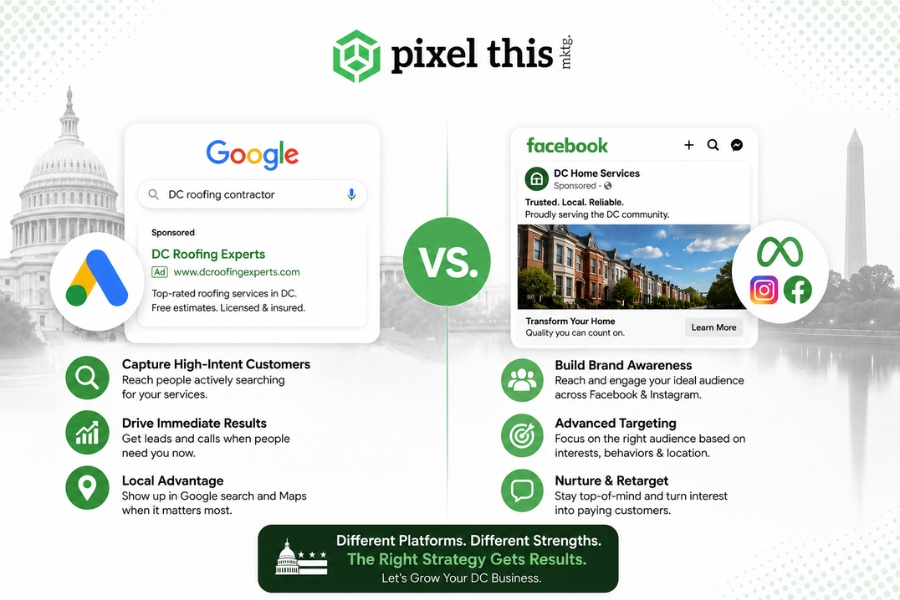
Google Ads Captures Existing Demand
Google Ads is built around search behavior.
People go to Google because they already want something. They search for:
- “Emergency plumber Arlington VA”
- “Best dentist in Bethesda”
- “HVAC repair near me”
- “DC business attorney”
- “Roof replacement Fairfax”
These users already have a problem and are actively looking for a solution.
That means Google Ads is excellent for businesses that rely on immediate customer intent.
When someone clicks your ad, they’re often much closer to making a buying decision.
This is called demand capture.
You’re not convincing someone they need your service — you’re simply showing up when they already need it.
Meta Ads Creates Demand
Meta Ads includes:
- Facebook Ads
- Instagram Ads
- Messenger Ads
- Audience Network placements
Unlike Google users, people scrolling Facebook or Instagram are not actively searching for services.
They’re browsing content, watching videos, checking messages, or interacting socially.
Your ad interrupts their attention.
This makes Meta a demand generation platform.
Instead of capturing existing intent, you’re creating awareness and interest.
For example:
A homeowner in Northern Virginia may not search Google for landscaping services today. But after seeing before-and-after landscaping videos on Instagram repeatedly, they may decide to contact a landscaper weeks later.
That’s the strength of Meta Ads.
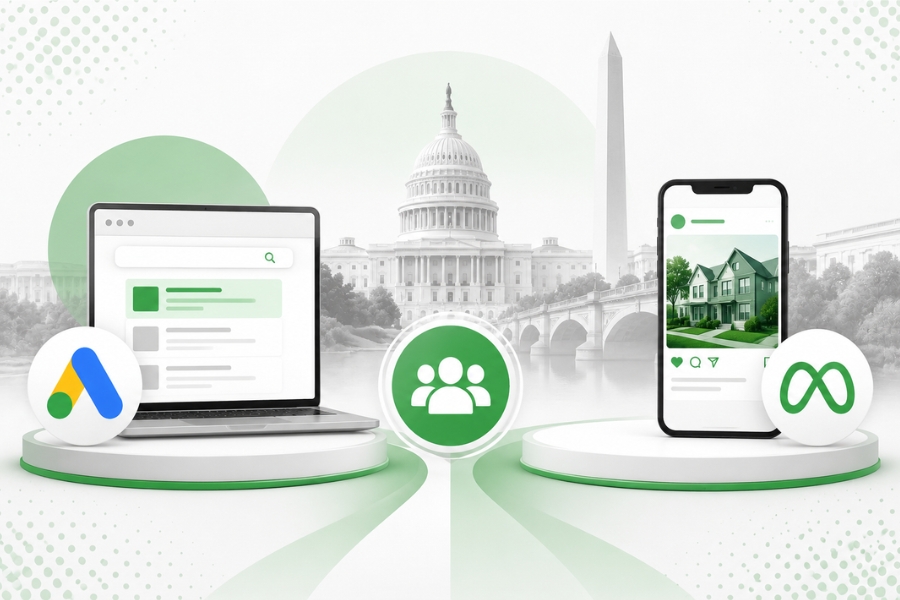
Google Ads vs. Meta Ads: The Customer Journey
One of the best ways to understand the difference is to look at the customer journey.
Meta Ads = Awareness Stage
Meta works best for:
- Introducing your business
- Building trust
- Showing visual transformations
- Staying top-of-mind
- Retargeting visitors
- Promoting offers and events
Meta helps people discover your business before they’re actively shopping.
Google Ads = Decision Stage
Google works best for:
- Capturing high-intent searches
- Driving immediate leads
- Phone calls
- Appointment bookings
- Emergency services
- Local search traffic
Google reaches users when they’re ready to take action.
Cost Comparison: Google Ads vs. Meta Ads in 2026
One of the biggest concerns for small businesses is cost.
Let’s look at realistic advertising costs for DMV-area businesses in 2026.
Google Ads Costs
Google Ads operates primarily on a pay-per-click (PPC) model.
You bid on keywords related to your services.
Average Google Ads CPC in 2026
| Industry | Average CPC |
|---|---|
| Home Services | $5–$18 |
| Legal | $20–$60 |
| Dental/Medical | $10–$40 |
| HVAC/Plumbing | $8–$30 |
| Real Estate | $4–$15 |
| Professional Services | $6–$20 |
In competitive areas like DC, Arlington, Alexandria, Bethesda, and Fairfax, costs are typically higher because many businesses compete aggressively for local search traffic.
Google Ads Advantages
- Higher purchase intent
- Faster lead generation
- Better for urgent services
- Strong conversion rates
- Excellent local targeting
Google Ads Challenges
- Expensive in competitive industries
- Requires keyword optimization
- Poor setup can waste money quickly
- Needs landing page optimization
Meta Ads Costs
Meta Ads generally have lower click costs.
Average Meta Ads CPC in 2026
| Campaign Type | Average CPC |
|---|---|
| Traffic Campaigns | $0.50–$2.00 |
| Lead Generation | $1–$4 |
| E-commerce | $0.75–$3 |
| Retargeting | $0.50–$2 |
Meta Ads are usually cheaper because users are not actively searching for your service.
However, lower click costs do not automatically mean better ROI.
Traffic from Meta is often colder and may require multiple touchpoints before conversion.
Which Platform Converts Better?
This depends heavily on the industry.
Google Ads Usually Converts Better for Service Businesses
For businesses like:
Google Ads typically delivers higher-quality leads because people are searching with intent.
A person searching “emergency electrician DC” is much more likely to convert than someone casually scrolling Instagram.
Meta Ads Often Performs Better for Visual or Lifestyle Businesses
Meta shines for businesses that rely on:
- Visual appeal
- Emotional connection
- Lifestyle branding
- Repeat exposure
Examples include:
- Restaurants
- Fitness studios
- Cosmetic clinics
- Real estate
- E-commerce
- Salons
- Event businesses
- Home remodeling
These industries benefit from visual storytelling and repeated brand exposure.
Best Use Cases for Google Ads
1. Local Service Businesses
Google Ads dominates local search intent.
If customers search for your service before buying, Google should likely be part of your strategy.
Examples:
- “Water damage restoration DC”
- “Best CPA in Rockville”
- “Personal injury lawyer Arlington”
2. Emergency Services
Urgent needs perform extremely well on Google Ads.
Examples:
- Locksmiths
- HVAC repair
- Emergency plumbing
- Towing companies
These customers need immediate help.
3. High-Ticket Services
Google works well when customers conduct research before spending money.
Examples:
- Cosmetic dentistry
- Legal services
- Business consulting
- Commercial contractors
4. Businesses That Need Leads Fast
Google Ads can start generating leads within hours when campaigns are properly optimized.
That speed is valuable for growing businesses.
Best Use Cases for Meta Ads
1. Brand Awareness Campaigns
Meta is excellent for increasing local visibility.
You can target:
- Specific zip codes
- Income ranges
- Interests
- Behaviors
- Local communities
This is especially valuable in the DMV, where neighborhoods and communities strongly influence buying behavior.
2. Retargeting Campaigns
One of Meta’s strongest capabilities is retargeting.
If someone visits your website but doesn’t convert, Meta can continue showing them ads across Facebook and Instagram.
This dramatically improves conversion rates.
3. Visual Businesses
If your work looks impressive visually, Meta can perform extremely well.
Examples:
- Kitchen remodeling
- Landscaping
- Med spas
- Real estate
- Interior design
- Photography
Before-and-after content often performs exceptionally well.
4. Promotions and Events
Meta works well for:
- Local events
- Seasonal offers
- Grand openings
- Promotions
- Community campaigns
Why Most Successful Businesses Use Both
The best digital marketing strategies usually combine Google Ads and Meta Ads together.
Here’s why:
Meta Builds Familiarity
People see your brand repeatedly on Facebook and Instagram.
You educate them, build trust, and stay visible.
Google Captures the Final Decision
Later, when they’re ready to buy, they search Google.
Because they already recognize your brand, they’re more likely to click your ad.
This combination creates a much stronger marketing funnel.
A Smart DMV Advertising Funnel
Here’s a common high-performing strategy for small businesses in the DC area.
Step 1: Meta Ads Generate Awareness
Run:
- Video ads
- Educational content
- Before-and-after visuals
- Testimonials
- Community-focused content
Target local audiences in:
- DC
- Arlington
- Alexandria
- Bethesda
- Fairfax
- Silver Spring
- Reston
- Rockville
Step 2: Retarget Website Visitors
Show follow-up ads to:
- Website visitors
- Social media engagers
- Video viewers
- Email subscribers
This keeps your business top-of-mind.
Step 3: Google Search Ads Capture Intent
When prospects finally search:
- “Best contractor near me”
- “Top dentist in DC”
- “Marketing agency Northern Virginia”
Your business appears at the exact right moment.
Common Advertising Mistakes DMV Businesses Make
1. Sending Ad Traffic to a Weak Website
Even the best ads fail if your website is slow, confusing, or outdated.
Your landing page matters just as much as the ad itself.
2. Choosing the Wrong Platform
Many businesses pick platforms based on popularity instead of strategy.
Not every business needs Facebook Ads first.
Not every business should start with Google Ads.
The right choice depends on:
- Your industry
- Customer behavior
- Budget
- Sales cycle
- Competition
3. Ignoring Retargeting
Most users do not convert immediately.
Retargeting is one of the highest-ROI advertising tactics available.
4. Poor Geographic Targeting
The DMV market is highly localized.
Campaigns should often target:
- Specific counties
- Affluent neighborhoods
- Commute areas
- Service zones
Broad targeting wastes budget.
5. Running Ads Without Tracking
If you don’t track:
- Calls
- Leads
- Form submissions
- Conversions
You cannot optimize performance effectively.
How Much Should a Small Business Spend on Ads?
Budgets vary widely by industry, but here are realistic starting points.
Recommended Starting Budgets
| Business Type | Suggested Monthly Budget |
|---|---|
| Local Services | $1,000–$3,000 |
| Legal/Medical | $3,000–$10,000+ |
| Home Services | $1,500–$5,000 |
| E-commerce | $1,000–$5,000 |
| Professional Services | $1,500–$4,000 |
Even a modest budget can work if campaigns are structured strategically.
Which Platform Is Better for Your Business?
Choose Google Ads If:
- Customers actively search for your services
- You need leads quickly
- You offer urgent services
- You operate in a competitive local market
- Your services are high-intent purchases
Choose Meta Ads If:
- Your business is visually driven
- You want more local awareness
- You need retargeting
- You run promotions frequently
- Your audience spends time on Instagram/Facebook
Use Both If:
- You want long-term growth
- You want a full-funnel strategy
- You want stronger brand recognition
- You want lower customer acquisition costs over time
The Future of Paid Advertising in 2026
Digital advertising continues evolving rapidly.
Key trends shaping Google and Meta Ads include:
- AI-powered campaign optimization
- Increased automation
- Short-form video dominance
- Stronger local targeting
- Higher competition in search
- Greater importance of creative content
- Privacy changes affecting audience tracking
Businesses that adapt early will gain a major advantage.
Conclusion: Build a Smarter Ad Strategy for Your DMV Business
Google Ads and Meta Ads are both powerful — but they solve different problems.
Google Ads captures people actively searching for solutions.
Meta Ads builds awareness, trust, and long-term brand visibility.
For most DMV small businesses, the smartest strategy isn’t choosing one platform over the other. It’s understanding how to use each platform strategically based on your goals, audience, and budget.
A well-managed advertising strategy can:
- Generate consistent leads
- Increase local visibility
- Improve conversion rates
- Reduce wasted ad spend
- Grow your business predictably
But successful advertising requires more than just boosting posts or running random keywords. It requires proper targeting, landing pages, tracking, creative strategy, and ongoing optimization.
At Pixel This Marketing, we help DC, Maryland, and Northern Virginia businesses run smarter advertising campaigns that actually generate results.
Whether you need:
- Google Ads management
- Facebook & Instagram advertising
- Retargeting campaigns
- Landing page optimization
- Local lead generation
- Full digital marketing strategy
Our team can help you build a campaign tailored to your business and budget.
Ready to grow your business with paid advertising?
Contact Pixel This Marketing today for a free strategy consultation.
Follow us on Facebook, Instagram, and Google Business Profile to stay updated with the latest marketing tips, insights, and success stories.
Frequently Asked Questions (FAQ)
Q. Are Google Ads better than Facebook Ads for local businesses?
It depends on your business type and goals. Google Ads usually perform better for high-intent local services like plumbing, legal, dental, and HVAC because users are actively searching. Facebook and Instagram Ads are often better for brand awareness, retargeting, and visually driven businesses.
Q. How much should a small business spend on Google Ads in 2026?
Most small businesses should start with at least $1,000–$3,000 per month for Google Ads. Competitive industries like legal, medical, and real estate may require larger budgets due to higher cost-per-click rates.
Q. Is Meta advertising worth it for small businesses?
Yes. Meta Ads can be extremely effective for building local awareness, retargeting website visitors, promoting offers, and showcasing visual content. Businesses with strong visuals and community engagement often perform very well on Facebook and Instagram.
Q. Should my business run Google Ads and Meta Ads together?
In many cases, yes. Using both platforms creates a stronger marketing funnel. Meta Ads build awareness and keep your brand visible, while Google Ads capture customers when they’re ready to make a purchase decision.


