
Hiring a digital marketing agency is an investment in your business growth. Whether you’re focused on generating leads, increasing website traffic, improving search rankings, or growing your brand online, success depends on more than just launching campaigns—it requires consistent communication and collaboration.
One of the most common questions business owners ask is:
“How often should I meet with my digital marketing agency?”
The short answer is that most businesses benefit from monthly strategy meetings, regular performance updates, and access to real-time reporting. However, the ideal communication schedule depends on your business goals, campaign complexity, industry competition, and growth stage.
Finding the right balance is important. Too little communication can lead to missed opportunities and misaligned strategies. Too many meetings can slow down progress and take valuable time away from executing campaigns.
Let’s explore what an effective agency communication schedule looks like and how it can help maximize your marketing results.
Why Regular Agency Meetings Matter
Digital marketing is constantly changing. Search engine algorithms evolve, competitors launch new campaigns, consumer behavior shifts, and advertising platforms update their policies and features regularly.
Without consistent communication, even well-designed campaigns can drift away from your business objectives.
Regular meetings help ensure:
- Marketing efforts stay aligned with business goals
- Campaign performance is reviewed and optimized
- New opportunities are identified quickly
- Potential issues are addressed before they become costly
- Both teams remain accountable and informed
The strongest agency-client relationships are built on transparency, collaboration, and ongoing communication.

What Is the Ideal Meeting Schedule?
While every business is different, a communication structure like the following works well for most companies.
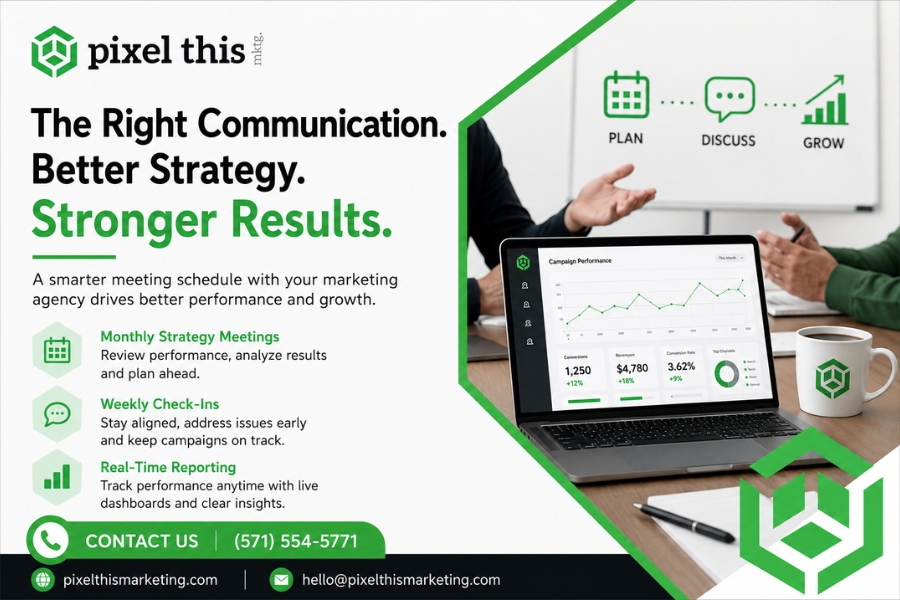
Monthly Strategy Meetings
A monthly strategy meeting serves as the foundation of a successful agency partnership.
During these meetings, your agency should review key performance metrics, discuss campaign results, identify trends, and outline the strategy for the upcoming month.
Topics typically include:
- Website traffic growth
- Lead generation performance
- Conversion rates
- SEO progress
- Paid advertising results
- Social media performance
- Content marketing updates
- Upcoming opportunities and priorities
A good agency doesn’t simply present numbers. They explain what those numbers mean for your business and recommend actionable next steps.
Most monthly meetings last between 45 and 60 minutes.
Weekly or Bi-Weekly Check-Ins
For businesses running active campaigns, short weekly or bi-weekly updates can be extremely valuable.
These meetings are usually brief and focused on:
- Campaign progress
- Immediate challenges
- Approval requests
- Upcoming content or ad launches
- Performance highlights
Even a 15-20 minute call can help prevent small issues from becoming larger problems.
Real-Time Reporting Access
Modern marketing agencies should provide access to live reporting dashboards whenever possible.
Instead of waiting for monthly reports, business owners should be able to monitor key metrics such as:
- Website visitors
- Leads generated
- Advertising spend
- Conversion rates
- SEO rankings
- Return on investment
Real-time visibility creates transparency and helps business owners stay informed without constantly requesting updates.
Meeting Frequency During Different Campaign Stages
The communication needs of a business often change as campaigns mature.
1. Onboarding and Launch Phase (First 60-90 Days)
This is usually the most communication-intensive stage.
Your agency is learning about your business, target audience, competitors, products, services, and goals. New campaigns are being built, tracking systems are installed, and initial strategies are tested.
During this phase, weekly meetings are often beneficial.
Topics may include:
- Brand messaging
- Campaign setup progress
- Tracking implementation
- Website improvements
- Audience research
- Early performance data
Frequent communication during onboarding helps create a strong foundation for future success.
2. Growth Phase
Once campaigns are running smoothly and generating data, communication can become more structured.
Most businesses perform well with:
- One monthly strategy meeting
- Weekly or bi-weekly progress updates
- Continuous reporting access
At this stage, the focus shifts from setup to optimization and scaling.
3. Mature Campaign Phase
For campaigns that have consistently produced results over several months, fewer meetings may be necessary.
Many businesses move to:
- Monthly strategy reviews
- Written weekly summaries
- Quarterly growth planning sessions
As long as reporting remains transparent and communication channels remain open, this schedule often works effectively.
Signs You Are Not Meeting Often Enough
A lack of communication can negatively impact campaign performance.
You may need more frequent meetings if:
- Campaign problems are discovered too late
- You are unsure what your agency is currently working on
- Reports focus only on past performance without future planning
- Your business priorities have changed but campaigns have not adapted
- You regularly have unanswered questions
If these issues sound familiar, it may be time to discuss a new communication structure with your agency.
Signs You May Be Meeting Too Often
While communication is important, excessive meetings can become counterproductive.
You may be over-meeting if:
- Conversations regularly exceed their scheduled time
- The same topics are repeated without decisions being made
- Internal teams struggle to focus on other priorities
- Agency resources are spent preparing presentations instead of optimizing campaigns
- Meetings generate discussion but little action
The goal is to spend enough time collaborating while leaving plenty of time for execution.
What Should Be Covered in Every Agency Meeting?
To maximize value, every meeting should have a clear agenda.
An effective monthly review usually includes:
Performance Review
A summary of key metrics and results achieved during the previous period.
Goal Progress
An update on how campaigns are tracking against agreed objectives.
Insights and Learnings
Discussion about what worked, what didn’t, and why.
Optimization Plans
Recommended changes to improve future performance.
Upcoming Opportunities
New marketing initiatives, seasonal promotions, content ideas, or growth opportunities.
Action Items
Clear responsibilities and deadlines for both the agency and the client.
Meetings should always end with clear next steps.
How Business Owners Can Improve Agency Results
Successful marketing partnerships require effort from both sides.
To get the most value from your agency:
Share Business Updates Early
Tell your agency about:
- New services
- Product launches
- Promotions
- Staffing changes
- Seasonal campaigns
- Business goals
The more context your agency has, the better they can align marketing efforts with business priorities.
Ask Questions
Don’t hesitate to ask for clarification.
If reports feel overly technical, request simpler explanations. A quality agency should be able to explain marketing performance in terms of business growth, revenue, and return on investment.
Focus on Outcomes
Instead of concentrating solely on metrics such as clicks or impressions, focus discussions on outcomes like:
- Leads generated
- Sales growth
- Customer acquisition
- Revenue impact
- Cost per lead
- Return on ad spend
These are the metrics that directly affect business success.
Building a Strong Long-Term Agency Partnership
The best agency relationships are built on trust, transparency, and accountability.
When communication is consistent and productive, agencies gain a deeper understanding of your business, make better strategic decisions, and identify growth opportunities more effectively.
A reliable digital marketing agency should never leave you guessing about performance, strategy, or next steps. Instead, they should function as an extension of your team, helping guide your business toward its goals while keeping you informed every step of the way.
Conclusion
There is no universal answer to how often you should meet with your digital marketing agency, but for most businesses, a combination of monthly strategy meetings, regular progress updates, and real-time reporting creates the right balance.
The key is finding a communication rhythm that keeps everyone aligned without creating unnecessary meetings.
If you’re currently working with an agency and feel disconnected from your campaigns—or if you’re looking for a marketing partner that prioritizes transparency, communication, and measurable results—it’s worth reviewing whether your current process is truly supporting your business goals.
At Pixel This Marketing, we believe great marketing starts with great communication. Our team provides clear reporting, proactive strategy discussions, and ongoing support designed to help businesses grow with confidence.
If you’d like to discuss your marketing goals or learn how a more structured agency partnership can improve results, contact our team today. We’d be happy to help you build a marketing strategy that works for your business.
Frequently Asked Questions
Q. How often should I meet with my digital marketing agency?
Most businesses benefit from monthly strategy meetings combined with weekly or bi-weekly updates. Businesses in the onboarding phase or running aggressive growth campaigns may require more frequent communication.
Q. What should I expect during a monthly marketing review?
A monthly review should cover campaign performance, key metrics, business goals, insights, optimization recommendations, upcoming initiatives, and action items for both the agency and the client.
Q. Is it normal to have access to live marketing reports?
Yes. Many professional agencies provide real-time dashboards that allow clients to monitor website traffic, leads, advertising performance, SEO progress, and other important metrics at any time.
Q. How can I tell if my agency communication is ineffective?
Warning signs include unclear reporting, lack of strategic recommendations, delayed responses, uncertainty about campaign activities, and discovering problems only after performance declines.


