
Starting with a new digital marketing agency can be exciting, but it can also feel overwhelming. You’re introducing a new team to your business, sharing important data, discussing goals, and trusting professionals to help grow your brand online.
Many business owners expect immediate results, but successful digital marketing requires a strategic foundation before campaigns can deliver measurable outcomes. Understanding what happens during the first 30 days will help you set realistic expectations and build a productive relationship with your agency.
In this guide, we’ll walk through exactly what you can expect during your first month with a digital marketing agency, what metrics matter most, and how to ensure your partnership starts on the right foot.
Why the First 30 Days Matter
The first month is one of the most important stages of any marketing partnership. It sets the foundation for future campaigns, establishes communication processes, and allows your agency to gain a deep understanding of your business, customers, competitors, and goals.
A professional digital marketing agency doesn’t rush into launching campaigns. Instead, they take the time to conduct research, gather data, and create a strategy tailored to your business.
The stronger the foundation, the better the long-term results.
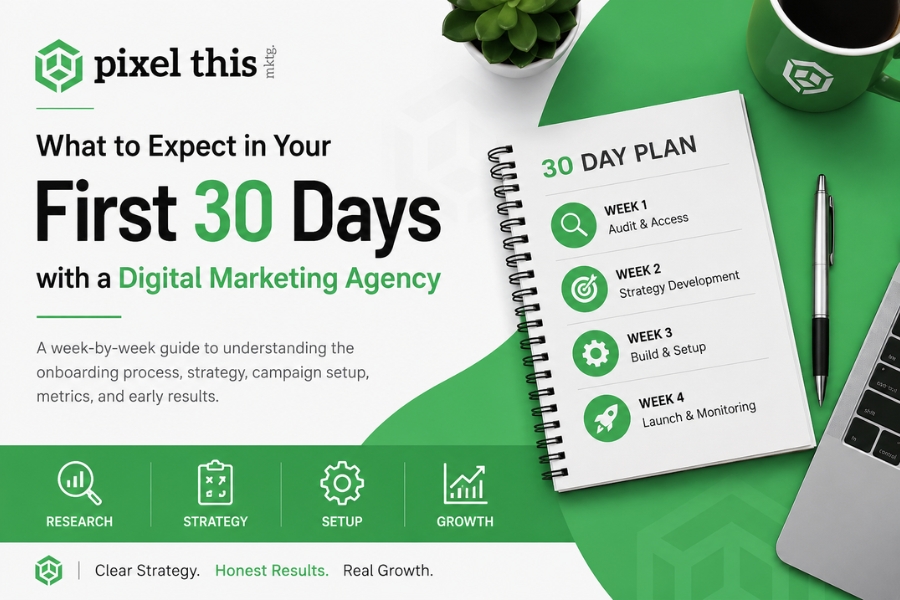
Week 1: Discovery, Onboarding, and Business Audit
The first week is dedicated to understanding your business.
Your agency will typically conduct a comprehensive audit of your existing digital presence, including:
- Website performance and user experience
- Search engine visibility
- Existing SEO rankings
- Social media profiles
- Current advertising campaigns
- Competitor analysis
- Content performance
- Analytics and conversion tracking
During this stage, you’ll usually participate in a kickoff meeting where you’ll discuss:
- Business goals
- Target audience
- Products or services
- Past marketing efforts
- Current challenges
- Growth expectations
Your agency may also request access to:
- Google Analytics
- Google Search Console
- Google Business Profile
- Meta Business Manager
- Google Ads account
- Website CMS
- Email marketing platforms
This information helps the agency build an accurate picture of your current marketing performance.

Week 2: Strategy Development
After completing the audit, the agency begins creating a customized digital marketing strategy.
This phase involves identifying opportunities, addressing weaknesses, and developing a roadmap for growth.
The strategy may include:
SEO Planning
- Keyword research
- Competitor analysis
- Technical SEO recommendations
- Content opportunities
- Local SEO improvements
Paid Advertising Strategy
- Audience targeting
- Budget allocation
- Campaign structure
- Ad creative planning
Content Marketing Plan
- Blog topics
- Landing page recommendations
- Content calendar
- Conversion-focused content ideas
Social Media Strategy
- Platform selection
- Posting schedule
- Content themes
- Engagement strategy
By the end of Week 2, you should have a clear understanding of what the agency plans to do and how success will be measured.
Week 3: Campaign Setup and Asset Creation
Week 3 is typically the busiest period behind the scenes.
Your agency begins building the campaigns and assets required to execute the strategy.
This may include:
Website Optimization
- Technical SEO fixes
- Page speed improvements
- Conversion optimization recommendations
- Landing page creation
PPC Campaign Setup
- Google Ads campaigns
- Meta Ads campaigns
- Audience creation
- Conversion tracking setup
Content Creation
- Blog writing
- Service page optimization
- Ad copy creation
- Email campaign development
Tracking and Analytics
- Goal setup
- Event tracking
- Conversion tracking
- Reporting dashboards
Most of this work happens internally, which is why business owners often don’t see immediate results during this stage.
Week 4: Campaign Launch and Early Monitoring
With everything prepared, campaigns begin going live.
The agency closely monitors performance and starts collecting data.
This stage focuses on:
- Tracking early campaign performance
- Identifying technical issues
- Monitoring user behavior
- Reviewing conversion data
- Making initial optimizations
For paid advertising campaigns, this period is often referred to as the “learning phase.” Platforms such as Google Ads and Meta Ads need time to gather enough data to optimize performance effectively.
While you may begin seeing traffic, leads, or engagement during Week 4, it’s still too early to judge the overall success of the strategy.
Why Results Aren’t Instant
One of the biggest misconceptions about digital marketing is that results happen overnight.
The truth is that sustainable growth requires time.
SEO Results
SEO is a long-term investment. Most businesses begin seeing meaningful improvements within 3 to 6 months, depending on competition and website authority.
PPC Results
Paid advertising can generate leads quickly, but optimization takes time. The first few weeks are focused on testing audiences, keywords, and ad creatives.
Social Media Growth
Building engagement and brand awareness requires consistent posting and audience interaction over several months.
Content Marketing
Content often takes time to rank in search engines and attract qualified traffic.
A good digital marketing agency focuses on building momentum rather than chasing short-term wins.
Key Metrics Your Agency Should Track
A professional digital marketing agency measures success using data tied directly to business goals.
SEO Metrics
- Organic traffic
- Keyword rankings
- Click-through rate (CTR)
- Backlink growth
- Domain authority
PPC Metrics
- Cost per click (CPC)
- Click-through rate (CTR)
- Cost per acquisition (CPA)
- Conversion rate
- Return on ad spend (ROAS)
Social Media Metrics
- Reach
- Engagement rate
- Follower growth
- Website traffic
- Link clicks
Email Marketing Metrics
- Open rates
- Click-through rates
- Conversion rates
- Unsubscribe rates
Business Metrics
- Leads generated
- Revenue attributed
- Customer acquisition cost (CAC)
- Return on investment (ROI)
Always ask your agency how often reports will be delivered and which KPIs they prioritize.
How Involved Should You Be?
Many business owners assume they can completely hand off marketing responsibilities after signing with an agency.
In reality, your involvement is extremely important during the first month.
Your agency will need:
- Brand guidelines
- Product knowledge
- Service information
- Customer insights
- Approval on creative assets
- Feedback on campaigns
The more responsive and collaborative you are, the faster your agency can move forward.
Once the initial setup is complete, the relationship typically becomes more streamlined and efficient.
Signs You’re Working with a Great Digital Marketing Agency
Even before major results appear, there are indicators that your agency is doing quality work.
Look for:
- Clear communication
- Regular updates
- Defined goals and timelines
- Transparent reporting
- Customized strategies
- Fast responses to questions
- Professional campaign execution
A reliable agency explains its decisions in simple language and focuses on your business objectives rather than vanity metrics.
What If You Don’t See Results After the First Month?
Thirty days is rarely enough time to evaluate the success of a digital marketing strategy.
However, you should see:
- A completed audit
- A documented strategy
- Active campaigns or campaign setup
- Initial performance data
- Regular communication and reporting
If these elements are missing, it’s worth scheduling a discussion with your agency.
Most marketing experts recommend evaluating performance over a minimum of 90 days before making major decisions about the partnership.
Questions to Ask Your Digital Marketing Agency
Asking the right questions can help ensure you’re working with the right team.
Consider asking:
- What are your goals for the first 30, 60, and 90 days?
- How will success be measured?
- How often will I receive reports?
- Who will manage my account?
- What resources do you need from me?
- What quick wins did you identify during the audit?
- How do you handle campaign optimization?
These questions help create transparency and align expectations from the beginning.
Conclusion
The first 30 days with a digital marketing agency are focused on building a strong foundation for long-term growth. While immediate results are rare, this period is critical for understanding your business, developing a strategy, setting up campaigns, and creating a framework for future success.
Whether you’re investing in SEO, PPC advertising, social media marketing, content marketing, or website optimization, patience and collaboration are essential. The agencies that deliver the best results are the ones that take time to understand your goals and build data-driven strategies designed for sustainable growth.
At Pixel This Marketing, we believe in transparency, communication, and measurable results. From onboarding to ongoing optimization, our team works closely with every client to create customized digital marketing solutions that help businesses grow confidently online.
Contact Us
Ready to grow your business with a trusted digital marketing agency?
Pixel This Marketing
📞 Call Us: +1 (571) 554-5771
🌐 Website: https://pixelthismarketing.com
📧 Book a Free Strategy Consultation Today
Let’s discuss your goals and create a digital marketing strategy designed to generate more traffic, more leads, and more revenue.
Frequently Asked Questions (FAQs)
Q. How long does it take to see results from a digital marketing agency?
Results vary depending on the services being used. PPC campaigns can generate leads within a few weeks, while SEO typically takes 3 to 6 months to produce significant organic growth.
Q. What information does a digital marketing agency need during onboarding?
Most agencies require access to analytics platforms, advertising accounts, website management systems, social media accounts, branding materials, and previous campaign data.
Q. How often should I receive marketing reports?
Most agencies provide monthly reports, although some offer weekly updates during the onboarding and launch phases.
Q. What services should a full-service digital marketing agency provide?
A full-service agency should offer SEO, PPC advertising, social media marketing, email marketing, content creation, website design and development, analytics, and conversion optimization services.


