
If you’ve ever wondered how marketing agencies consistently rank websites on search engines, the answer almost always starts with solid keyword research. It’s not about guessing what people search for—it’s about understanding intent, analysing data, and building a strategy that aligns with real user behaviour.
At pixel this marketing, keyword research isn’t treated as a one-time task. It’s a structured process that guides everything from content creation to paid campaigns. In this guide, you’ll learn how to approach keyword research the same way an agency does—step by step, with practical insights you can apply right away.
Why Keyword Research Matters More Than Ever
Before diving into the process, it’s important to understand why keyword research is so critical.
Search engines are no longer just matching words—they’re interpreting intent. That means if your content doesn’t align with what users are actually looking for, it won’t rank, no matter how well it’s written.
Good keyword research helps you:
- Reach the right audience
- Improve organic traffic
- Increase conversions
- Avoid wasting time on low-value content
Agencies don’t just look for keywords—they look for opportunities.
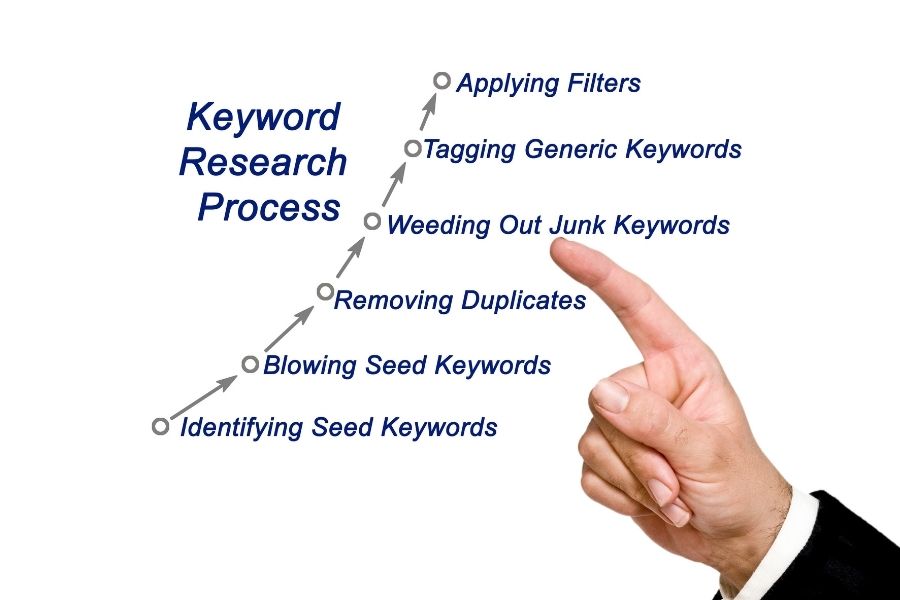
Step 1: Start With Clear Goals
The first mistake most people make is jumping straight into tools. Agencies start with business goals.
Ask yourself:
- Are you trying to generate leads?
- Drive traffic?
- Sell products?
- Build brand awareness?
Your goals determine the type of keywords you should target.
For example:
- Informational keywords → Blog content
- Transactional keywords → Service/product pages
- Navigational keywords → Brand visibility
At pixel this marketing, every keyword strategy begins with aligning keywords to business outcomes—not just search volume.
Step 2: Understand Search Intent
Not all keywords are created equal. Two people can search similar terms but want completely different things.
There are four main types of search intent:
1. Informational
Users want to learn something
Example: “how to do keyword research”
2. Navigational
Users are looking for a specific website
Example: “pixel this marketing website”
3. Transactional
Users are ready to take action
Example: “hire SEO agency”
4. Commercial Investigation
Users are comparing options
Example: “best SEO agency for small business”
Agencies prioritize intent over volume. A keyword with 500 searches and high buying intent is often more valuable than one with 10,000 searches and no conversion potential.
Step 3: Build a Seed Keyword List
Seed keywords are the foundation of your research. These are basic terms related to your business, services, or niche.
Start by brainstorming:
- Your services (SEO, web design, PPC)
- Your target audience problems
- Industry-specific terms
For example, if you run a digital marketing agency, your seed keywords might include:
From here, you expand into more specific keyword variations.
Step 4: Use Keyword Research Tools (Smartly)
Agencies rely on tools—but they don’t depend on them blindly.
Popular tools include:
- Google Keyword Planner
- Ahrefs
- SEMrush
- Ubersuggest
What to look for:
- Search volume
- Keyword difficultyKeyword Research Like an Agency Guide
- Cost-per-click (CPC)
- Trends
But here’s the key: tools give data, not strategy.
At pixel this marketing, tools are used to validate ideas—not replace human understanding.

Step 5: Find Long-Tail Keywords
Long-tail keywords are longer, more specific phrases. They usually have lower search volume but higher conversion rates.
Examples:
- “best SEO agency for small business in Maryland”
- “affordable web design services for startups”
Why agencies love long-tail keywords:
- Less competition
- Higher intent
- Easier to rank
Instead of targeting “SEO services,” you might target:
“local SEO services for small businesses”
This approach brings more qualified traffic.
Step 6: Analyze Competitors
One of the fastest ways to find winning keywords is to study what’s already working.
Look at:
- Competitor websites
- Their top-ranking pages
- Keywords they are targeting
Ask:
- What keywords are they ranking for?
- What content performs best?
- Where are the gaps?
Agencies don’t copy competitors—they identify opportunities.
At pixel this marketing, competitor analysis helps uncover keywords others are missing, not just the ones they’re using.
Step 7: Focus on Keyword Clustering
Instead of targeting one keyword per page, agencies group related keywords into clusters.
For example:
Primary keyword:
- “keyword research guide”
Related keywords:
- how to do keyword research
- keyword research tools
- SEO keyword strategy
All of these can be covered in one comprehensive piece of content.
This improves:
- SEO rankings
- Content depth
- User experience
Search engines prefer content that fully answers a topic—not just touches on it.
Step 8: Evaluate Keyword Difficulty vs Opportunity
Not every keyword is worth targeting.
Agencies evaluate:
- Competition level
- Domain authority
- Content quality on current ranking pages
If you’re a new website, targeting highly competitive keywords may not be realistic.
Instead:
- Start with low to medium difficulty keywords
- Build authority gradually
- Move to competitive keywords over time
This is a long-term strategy, not a quick win.
Step 9: Map Keywords to Content
Once you have your keywords, the next step is assigning them to specific pages.
This is called keyword mapping.
Example:
- Homepage → brand keywords
- Service pages → transactional keywords
- Blog posts → informational keywords
This ensures:
- No keyword overlap
- Clear content structure
- Better ranking potential
At pixel this marketing, keyword mapping is a key part of building scalable SEO strategies.
Step 10: Create Content That Matches Intent
Keyword research doesn’t work without strong content.
If someone searches:
“how to do keyword research”
They don’t want:
- A sales pitch
- A short article
They want:
- A detailed guide
- Step-by-step instructions
- Real examples
Your content should match:
- Depth
- Format
- Tone
Agencies focus on creating content that satisfies both users and search engines.
Step 11: Track and Optimize
Keyword research is not a one-time task. Agencies continuously monitor performance.
Track:
- Rankings
- Traffic
- Conversions
If something isn’t working:
- Update content
- Improve keyword targeting
- Adjust strategy
SEO is an ongoing process.
At pixel this marketing, optimization is just as important as research.
Request a quote for professional SEO services with pixel this marketing and discover how we can boost your rankings, traffic, and business growth.
Common Mistakes to Avoid
Even with the right tools, many people make simple mistakes:
- Targeting keywords without understanding intent
- Ignoring long-tail keywords
- Choosing high-volume keywords only
- Not updating old content
- Skipping competitor analysis
Avoiding these mistakes can give you a significant advantage.
Real Agency Mind set
What separates agencies from beginners is not tools—it’s mind set.
Agencies:
- Think in strategy, not just keywords
- Focus on ROI, not just traffic
- Analyse data continuously
- Adapt based on performance
Keyword research is not about finding words—it’s about understanding people.
Conclusion
Keyword research is the foundation of any successful SEO strategy. When done right, it helps you connect with your audience, improve visibility, and drive real business results.
By following an agency-style approach—focusing on intent, strategy, and continuous improvement—you can create content that not only ranks but also converts.
If you want expert help with keyword research, SEO, or digital marketing strategies, pixel this marketing is here to help.
Contact us today to build a strategy that drives real growth for your business.
And don’t forget to stay connected—
Follow us on Facebook, Instagram, and Google Business Profile for the latest marketing tips, updates, and insights.
Frequently Asked Questions (FAQs)
Q: How long does keyword research take?
It depends on the project, but a thorough keyword research process can take anywhere from a few hours to several days, especially when analyzing competitors and search intent.
Q: What is the difference between short-tail and long-tail keywords?
Short-tail keywords are broad and highly competitive, while long-tail keywords are more specific, easier to rank for, and usually have higher conversion rates.
Q: Can I do keyword research without paid tools?
Yes, you can use free tools like Google Keyword Planner and search suggestions, but paid tools provide deeper insights and more accurate data.
Q: How often should I update my keyword strategy?
You should review and update your keyword strategy every few months to stay aligned with search trends and competition changes.


